Video Remote Interpretation: LanguageLine and Vonage Partner to Humanise Digital Communication
- Tim Banting
- Apr 23
- 2 min read

Updated: May 4
Vonage has partnered with LanguageLine Solutions to integrate high-definition video capabilities into on-demand interpretation services. This move goes beyond audio-only support, allowing for the capture of critical visual cues in real-time communication.
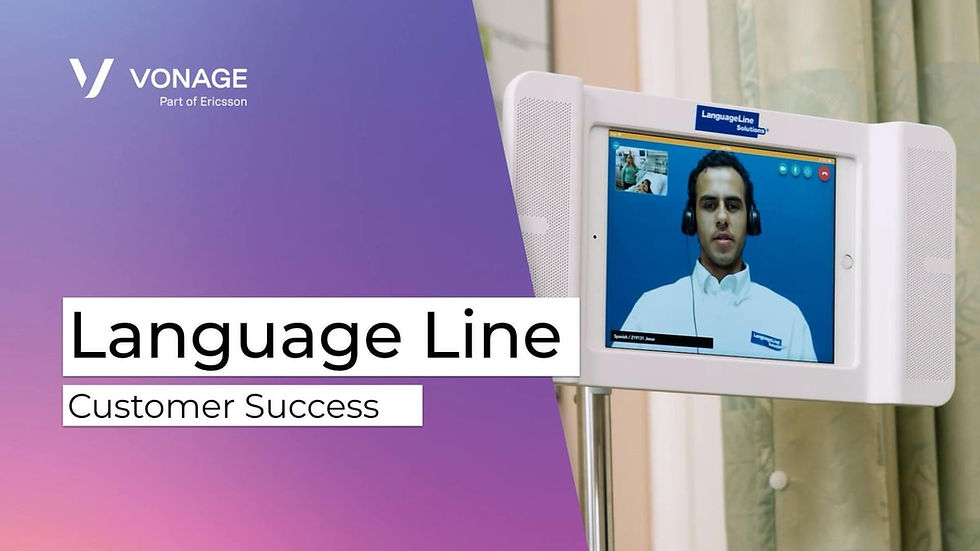
By leveraging the Vonage Video API, LanguageLine has launched an embedded video solution. This innovation is designed to reduce misunderstandings in high-stakes environments. The integration allows professional linguists to see facial expressions and body language. This feature is particularly vital for American and British Sign Language users, as well as patients in clinical settings.
What: Sector Demand Driving Adoption of Video Remote Interpretation
This partnership signals a significant shift in the Communication Platform as a Service (CPaaS) market. Basic connectivity is being replaced by specialised, "human-centric" APIs.
Market Context
LanguageLine is a global leader in language services. This partnership reflects a broader trend of traditional service providers digitising through "programmable" communications. Over-the-phone interpretation (OPI) was the industry standard for decades. However, the rise of telehealth and remote legal proceedings has made video remote interpretation (VRI) a baseline requirement for accessibility compliance.
Sector Demand
Demand is peaking in regulated industries. In healthcare, "equity of care" mandates require providers to ensure patients with limited English proficiency (LEP) or hearing impairments fully understand their treatment. Similarly, in legal and government sectors, the nuances of non-verbal communication can alter the outcome of an interview or testimony.
The Tech Evolution
This collaboration follows Vonage’s broader strategy under Ericsson. They aim to move into "hardened" architectures that support sensitive, regulated workloads. It positions Vonage’s Video API as a specialist tool for "vulnerable moments." These are interactions where connection speed and video clarity are not just features, but essential components of the service's reliability and trust.
Capabilities & Limitations
Capabilities
Interactive Presence: Enables face-to-face video interpretation for nearly 50 languages, including American and British Sign Language (ASL/BSL).
Multi-Platform Integration: The API allows for the interpretation service to be embedded directly into existing web, iOS, and Android applications without requiring external software.
Visual Context: Provides interpreters with access to facial expressions and visual aids. This feature speeds up connection times and improves user satisfaction scores.
Limitations
Bandwidth Dependency: As with all real-time video, the quality and reliability of the interpretation are heavily dependent on the end-user's local internet stability.
Language Delta: While LanguageLine offers audio support for over 240 languages, the video-specific interpretation is currently limited to a smaller subset of nearly 50 languages.
Signals to Watch
AI Translation vs. Human Touch: Watch for whether LanguageLine integrates Vonage’s AI Media Processor tools, such as real-time transcription or noise suppression, to supplement human interpreters.
Regulatory Adoption: As "digital equity" becomes a legal standard in public services, expect more government and healthcare tenders to mandate embedded video interpretation over traditional phone lines.
Conclusion
The integration of high-definition video capabilities into on-demand interpretation services marks a pivotal moment in the CPaaS market. It reflects the growing need for effective communication solutions in sensitive environments. As technology evolves, the demand for video remote interpretation will likely increase. This trend will shape the future of communication in healthcare, legal, and government sectors.
Source: Vonage Press Release


Comments